

 Back pain costs the NHS more than £1 billion a year and over the last 40 years cases of back pain have doubled in Britain. Here’s a quick guide to taking care when it strikes
USE PAINKILLERS ‘Take pain medication to enable you to keep moving,’ says Dr Ollie Hart, a GP specialising in back pain and founder of support and advice website sheffieldbackpain.com. ‘For some people paracetemol will be enough, while others may need an anti-inflammatory such as ibuprofen as well’. Talk to your pharmacist and if the pain persists for more than a fortnight, see your GP. ‘Additionally, acupuncture, spinal manipulation through chiropracty or osteopathy and massage may all help manage the pain,’ says Dr Hart. See below.
KEEP MOVING ‘The tendency is often to lie down when our backs hurt,’ says Elizabeth Dodson, a trustee of the charity Backcare UK. ‘Gentle walking, stretching or swimming will stop the muscles of the back contracting and help aid recovery.’
ICE IF YOU NEED IT ‘Another way to help back pain when it first strikes is by wrapping a packet of frozen peas in a tea towel and applying it to the affected area,’ says Dodson. ‘Do this for 15 minutes at a time and ensure you keep moving in between.
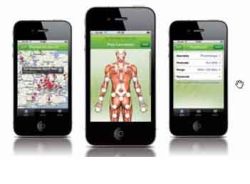 GET SUPPORT The genius new App from Backcare (left), launched last year contains everything you need to know to manage your back pain including videos. It’s called BackCare – for Back Pain and Bad Backs its free and available from iTunes’ Apple App Store. Find out more at backcare.org.uk. ‘If your pain persists for a fortnight, see your GP as you may be entitled to help such as physiotherapy or chiropracty and he/she can write you a referral,’ says Dodson. You might also opt for private back treatment (see below for other treatments on offer). Need advice now? Call the BackCare help line on 0845 130 2704.
3 THERAPIES TO HELP YOUR BACK PAIN IN THE LONGER-TERM
1. Acupuncture Studies have shown that the use of needles for back pain can help relieve pain. Find a practitioner British Acupuncture Council 0208 735 0400, acupuncture.org.uk
2. Osteopathy Using physical manipulation, stretching and massage to restore balance between the skeleton, muscles, ligaments and connective tissues to relieve pain. Find a practitioner The General Osteopathic Council 0207 357 6655 osteopathy.org.uk
3. Alexander Technique A discipline rather than a treatment that teaches patients how to use their bodies in new back-friendly ways, emphasising correct posture and movement in everyday life. Studies have shown it’s effective for chronic back pain. Find a practitioner The Society of teachers of the Alexander Technique stat.org.uk or call 0207 482 5135.
Like this article? Sign up to our newsletter to get more articles like this delivered straight to your inbox.